Rising electricity costs have made rooftop solar one of the most searched government benefits in India. A large number of users are actively searching for phrases like free solar panels, government solar scheme, and PM Surya Ghar free solar. This demand is driven by a new national initiative that significantly reduces the cost of installing rooftop solar systems for households.
PM Surya Ghar Yojana is designed to make residential solar power accessible, affordable, and financially beneficial for ordinary Indian families.
Advertisements
What Is PM Surya Ghar Yojana?
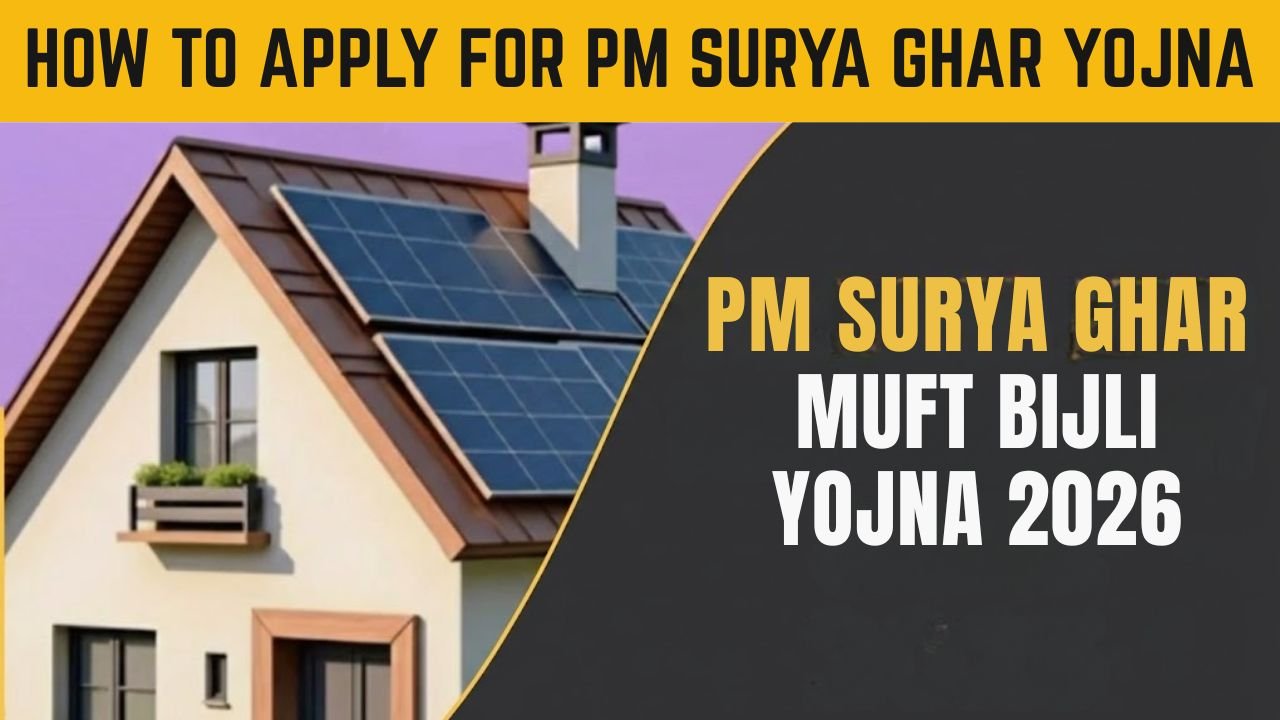
PM Surya Ghar: Muft Bijli Yojana is a central government scheme launched by the Government of India to promote rooftop solar adoption across residential homes. The scheme is implemented under the supervision of the Ministry of New and Renewable Energy.
The objective of the scheme is to enable households to generate their own electricity, reduce dependence on grid power, and lower monthly electricity expenses through subsidized rooftop solar installations.
Why People Call It “Free Solar”
The term “free solar” is commonly used because the scheme provides a substantial government subsidy that covers a large portion of the installation cost. In many cases, the remaining amount becomes low enough that users recover it quickly through electricity bill savings.
Under the scheme, households can receive up to 300 units of electricity per month at no additional cost after solar installation, depending on system size and consumption patterns.
How the Subsidy Works
The government provides financial assistance through a Direct Benefit Transfer mechanism. The subsidy is credited directly to the applicant’s bank account after installation and verification.
The subsidy structure is designed to favor small and medium rooftop systems typically used by residential homes. This significantly reduces the upfront investment required from the homeowner.
Because the subsidy is transferred directly, there is no involvement of intermediaries in the payment process.
Eligibility Criteria
To apply under PM Surya Ghar Yojana, the applicant must meet the following conditions:
Must be an Indian citizen
Must own a residential house with a suitable rooftop
Must have an active electricity connection
Must have a valid bank account for subsidy transfer
The scheme is intended strictly for residential use and does not apply to commercial or industrial properties.
Advertisements
Application Process for PM Surya Ghar Yojana
The application process is conducted online through the national rooftop solar system portal.
The applicant registers using electricity consumer details.
The local electricity distribution company verifies the application.
A government-approved solar vendor is selected.
Rooftop solar installation is completed.
System inspection is carried out.
Subsidy amount is credited directly to the applicant’s bank account.
This structured process ensures transparency and standardization across states.
Cost vs Long-Term Savings
Although the solar system is not entirely free at the time of installation, the financial benefit becomes clear over time. Monthly electricity bills reduce substantially, and in many cases, households reach a break-even point within a few years.
After recovery of the initial cost, electricity generated by the system effectively becomes free for the remaining lifespan of the solar panels, which typically ranges between 20 and 25 years.
Why PM Surya Ghar Yojana Is Gaining Massive Attention
The scheme aligns with three major public needs: cost reduction, energy security, and environmental sustainability. It also benefits from high trust due to government backing and clear financial incentives.
Search interest is driven by the perception of free electricity, long-term savings, and a one-time setup that delivers recurring benefits without monthly payments.
Advertisements
Final Overview
PM Surya Ghar Yojana offers one of the most financially impactful household benefits currently available in India. While the solar system itself is not completely free, the heavy subsidy and long-term savings make it functionally equivalent to free electricity for a large segment of households.
For residential homeowners seeking to reduce electricity expenses and adopt renewable energy, this scheme represents a significant opportunity supported by national policy.